There is no single cheapest heating system. In Wasaga Beach the answer depends on two things: whether natural gas runs on your street, and whether the house has ductwork. Answer those two questions first and the choice usually narrows to one or two options.
Why does heating cost matter so much here?
Wasaga Beach is a heating town. Environment Canada's 1981-2010 normals for Thornbury Slama, the climate station on the southern Georgian Bay shore west of town, give 4187.5 heating degree-days a year against 207.8 cooling degree-days. The average January daily minimum is -9.9 °C. The average July daily maximum is 24.8 °C.
So the system you heat with does most of the work, all year. A small saving on running cost per day of heat adds up over a long winter, while a saving on cooling barely shows. Choose for winter and treat summer as secondary.
What is the cheapest type of heating system in Canada?
Where natural gas is on the street, a high-efficiency gas furnace is usually the cheapest to run in a cold climate. The fuel is relatively inexpensive, and a condensing furnace turns most of it into heat.
A heat pump can match or beat gas on running cost through the milder part of the heating season. It moves heat rather than making it, so each unit of electricity gives you more than one unit of heat. As the outdoor temperature drops, it does less work for the same power. Cold-climate models hold up better than older ones, but the result still depends on the unit and on how cold the winter gets.
Electric baseboards, oil and propane are usually the most expensive to run. Baseboards are cheap to install and simple, but each one turns electricity directly into heat, with no gain from a heat pump. Oil and propane are delivered fuels, and prices move.
Installation matters as much as running cost. A gas furnace in a house with no gas service means paying to bring gas in. A heat pump in a house with no ducts means ductless heads on the walls. Compare the full cost of getting there as well as the monthly bill.
Does your street have a gas main?
Not every street in Wasaga Beach does. The gas utility's new-customer page checks by postal code whether a property is in its service area. It also has a separate route for homes where natural gas is not on the street.
Check this before you price anything else. If gas is on the street and your house is not connected, a gas furnace is worth pricing, together with the cost of the service connection. If gas is not on the street, your realistic options are a heat pump, a hybrid system on propane, oil, or staying with electric heat.
What kind of furnace do most homes in Ontario have?
Most Ontario houses on a gas main heat with a forced-air gas furnace, with ducts carrying the warm air to each room. In Wasaga Beach, what you actually have depends on when the house was built.
- **Early cottages, 1900s to 1950s.** The first cottages, mostly on the side streets between Mosley Street and the bay and in Oakview Beach, were summer buildings with no central heating. Heat was added later as baseboards, space heaters or a furnace squeezed into a crawlspace. Expect improvised ductwork, thin insulation and tight access.
- **Annexed beach communities, 1960s to 1990s.** Springhurst Beach, New Wasaga Beach, Brock's Beach and Bower's Beach have many year-round houses from this period. These were commonly built with electric baseboards or a chimney-vented mid-efficiency gas or oil furnace. Many have no ducts. When the old furnace is replaced, the chimney often needs a liner.
- **Newer subdivisions, 2000s onward.** Houses in the south end, such as Sunnidale Trails, typically have high-efficiency condensing gas furnaces venting through plastic pipes in the side wall.
What are the 3 most common types of HVAC systems?
For houses like these, three setups cover most of what you will be offered.
- **Ducted split system.** A furnace indoors and an air conditioner or heat pump outside, sharing the same ductwork. This is the standard in newer houses.
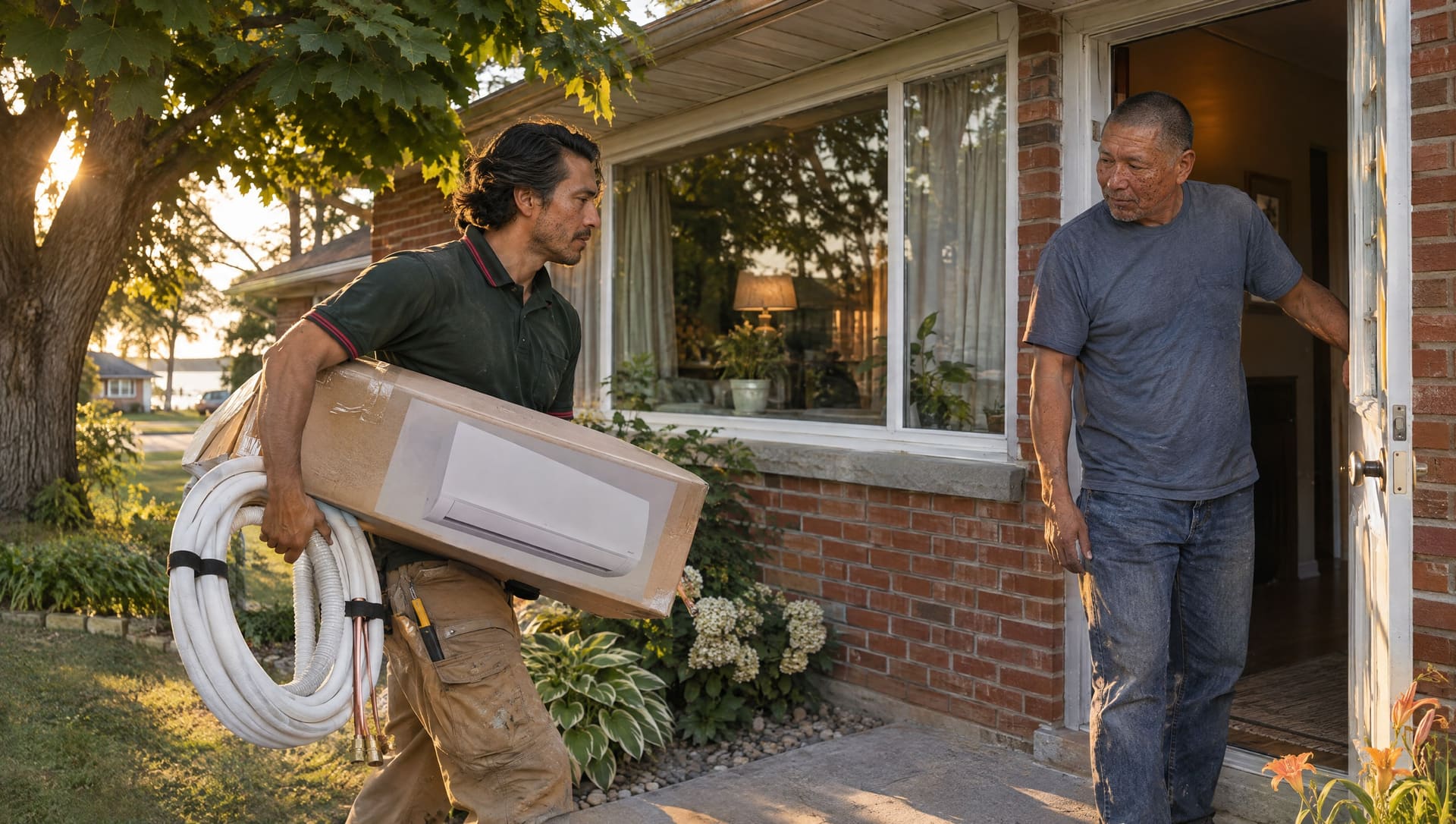
- **Ductless mini-split.** An outdoor heat pump connected to one or more wall-mounted heads indoors, with no ducts needed. This is the usual route for baseboard-heated cottages and 1970s houses.
- **Hybrid (dual-fuel).** A heat pump paired with a gas or propane furnace. The heat pump handles the milder days and the furnace takes over in deep cold.
What is the best heating system to have in your house?
Pick the one that fits the house you have. A rough guide:
- **Gas on the street, ducts in place.** A high-efficiency gas furnace is usually the lowest running cost. Adding a heat pump in place of a central air conditioner turns it into a hybrid and gives you cooling as well.
- **Gas on the street, no ducts, baseboards now.** Ductless heat pumps cut the baseboard bill and add cooling. Adding ducts so you can fit a gas furnace is a much bigger job, especially in a cottage with tight crawlspace access.
- **No gas on the street.** A ductless or ducted heat pump is the usual answer, with baseboards or a propane furnace as backup for the coldest nights.
- **Old chimney-vented furnace being replaced.** Price the chimney liner, or side-wall venting for a high-efficiency furnace, as part of the job. See furnace installation and replacement.
Rebate programs come and go, so check what is on offer when you are ready to buy.
What does the snow do to these choices?
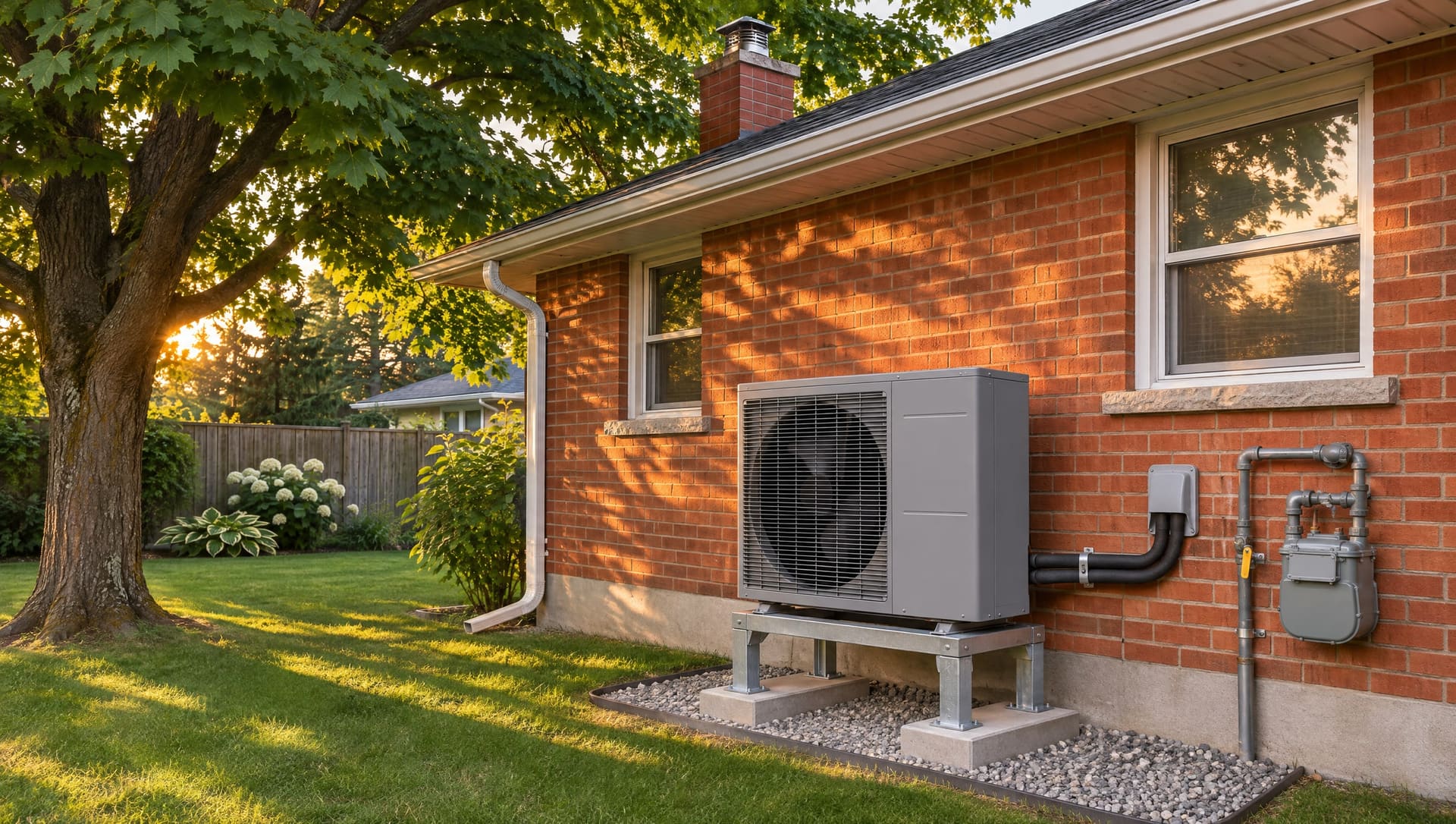
The Thornbury Slama normals show 266.6 cm of snow a year, with 79.1 cm in January and 70.8 cm in December. That is enough to bury side-wall furnace vents, gas meters and outdoor heat pump units.
- A condensing furnace shuts down when its intake or exhaust pipe drifts over or ices up. Keep the pipes clear after every storm.
- A heat pump's outdoor unit needs to sit on a stand above the usual snow line, out from under a roof edge that drops snow or meltwater on it. A buried unit cannot heat.
- Keep the gas meter clear too.
A system that is cheap to run but stops after every storm will cost you more, so plan the location before the install.
What about a home that sits empty in winter?
In the 2021 census, 10,811 of Wasaga Beach's 13,768 private dwellings were occupied by usual residents. A good share of homes sit empty in winter with the heating left running and nobody around.
For these houses the cheapest heat is the one that keeps running unattended. Turning the thermostat down saves fuel, but a furnace that shuts off on a blocked vent in January and stays off until spring can lead to frozen pipes, which cost far more than the fuel you saved. Before you leave:
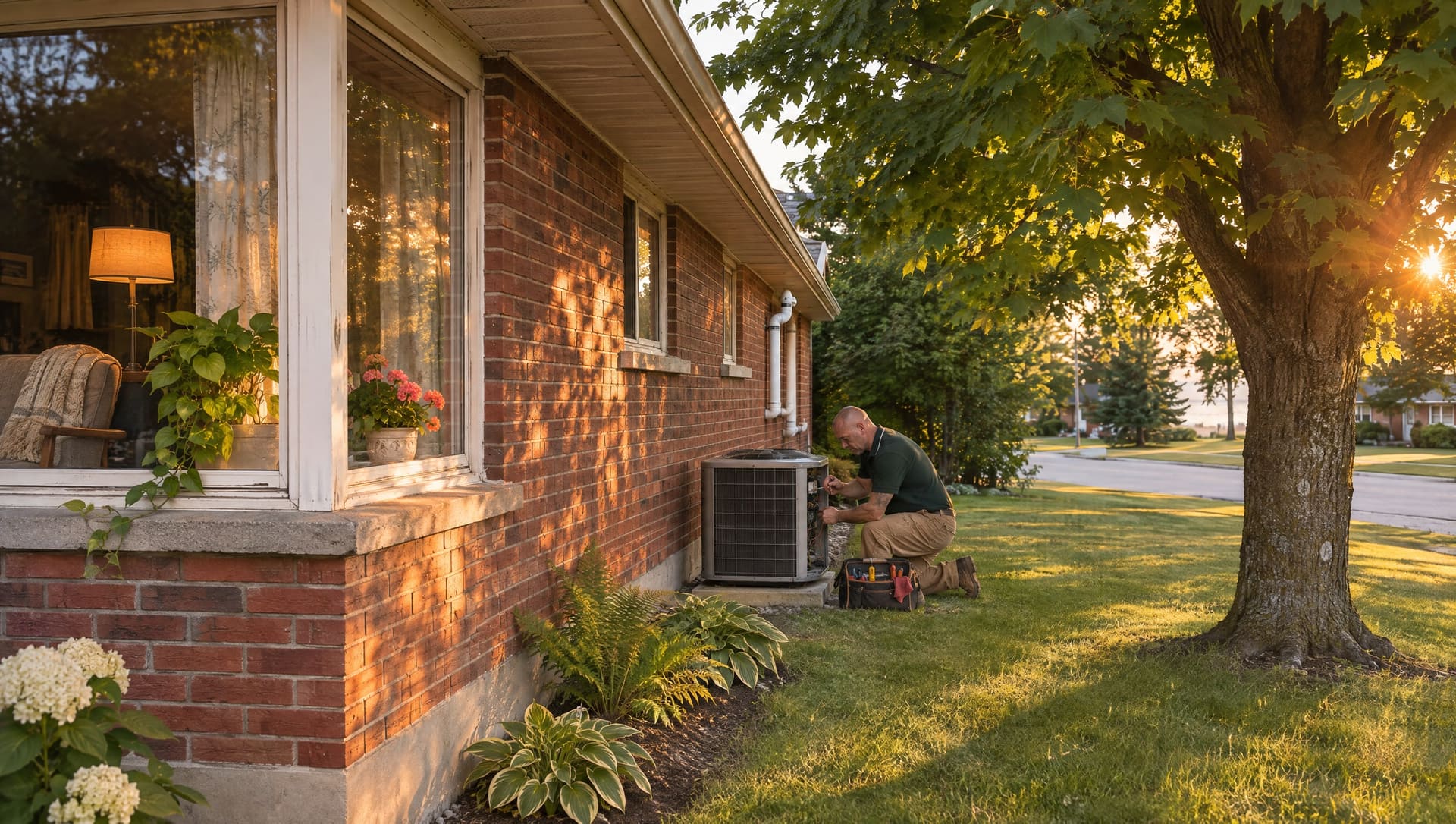
- Have the venting, condensate line and controls checked. See furnace and AC maintenance.
- Arrange for someone to clear the vents and the outdoor unit after heavy snow.
- Consider a thermostat or sensor that alerts you if the house gets cold.
If the house has a fuel-burning appliance, a fireplace or an attached garage, the Ontario Fire Code requires a working carbon monoxide alarm next to each sleeping area. Test it before you close up.
Who does the work?
Gas furnaces, propane conversions and new gas lines in Ontario fall under Ontario Regulation 212/01 and the CSA B149.1 installation code. Work is performed by TSSA-certified gas technicians. Heat pumps and air conditioning are refrigeration work, performed by 313A refrigeration and air conditioning mechanics.
For houses with no ducts, the guide to air conditioning without ductwork explains how ductless systems are laid out.
If you are weighing a heat pump against a gas furnace, see heat pumps for how Wasaga Beach Furnace approaches it.