
Many houses in Wasaga Beach were never built for central air. The early cottages between Mosley Street and the bay were summer buildings with no central heating at all. Heat came later, as baseboards, space heaters or a furnace squeezed into a crawlspace. Houses from the 1960s to the 1990s in Springhurst Beach, New Wasaga Beach, Brock's Beach and Bower's Beach often have electric baseboards and no ductwork. If that sounds like your house, this guide covers what works, what stays quiet and how big it needs to be.
What are the options when there are no ducts?
There are three practical ones.
- Window or portable units. Cheap to buy and easy to remove. They are loud, they block a window, and portable units with one hose pull warm outdoor air into the house through gaps. They're fine for one room in a cottage you use a few weeks a year.
- Ductless mini-split. One outdoor unit connects to one or more indoor heads on the wall through a small hole for the refrigerant lines, drain and wiring. No ducts needed. Each head cools its own room or zone.
- Adding ductwork for central air. Possible in some houses, but in a cottage with a crawlspace and tight framing it means opening walls and ceilings. In most no-duct houses here it costs a lot more and disturbs a lot more than a ductless system.
For a house with no ducts, ductless is the option most homeowners end up comparing against window units, so the rest of this guide is mostly about that choice.
What is the quietest type of air conditioner?
A ductless mini-split with a variable-speed (inverter) compressor is usually the quietest choice for a home.
A window unit puts the compressor, the fan and the motor in one box sitting in your window, so all of that noise is in the room. A ductless system puts the compressor and the condenser fan outside. Inside you hear only a small fan in the wall head, and at low speed it's often quieter than a household fridge.
The inverter helps too. An older single-speed unit runs flat out, shuts off, then starts again with a clunk. An inverter compressor slows down once the room is near the set temperature and keeps running gently, which means fewer starts, less noise and steadier humidity.
Central air in a well-designed duct system is also quiet indoors, but that only helps if the ducts are already there.
A few things make any system louder than it needs to be:
- An outdoor unit mounted on a wall bracket right under a bedroom window. Vibration carries through the framing.
- An indoor head that is too large for the room, cycling on and off.
- A dirty filter or coil, which makes the fan work harder.
- A unit sitting on uneven ground or a cracked pad.
On closely spaced cottage lots, think about where the outdoor unit sits in relation to your neighbour's bedroom as well as your own.
What percent of Canadian homes have AC?
We don't have a national figure to quote. Statistics Canada publishes household survey data on air conditioning if you want the current number. Over recent decades air conditioning has become common in Canadian homes, and it is more common where summers are hot and humid.
The local summer matters more for your decision. Environment Canada's 1981 to 2010 normals for the Thornbury Slama station, on the Georgian Bay shore west of Wasaga Beach, give an average July daily high of 24.8 °C. They show 207.8 cooling degree-days a year against 4,187.5 heating degree-days. In plain terms, the heating load here is about twenty times the cooling load. Summer is short and mild by Ontario standards, with some humid stretches.
You can still cool the house. Just size and choose for a short season, and think hard about whether the same equipment can help in winter.
How big should a ductless system be for a short summer?
Smaller than most people expect. An oversized air conditioner cools the room quickly, shuts off, and never runs long enough to pull moisture out of the air. You get a cool, clammy room and more on-off cycling. In a beach town with humid July air off the bay, removing moisture is half the job.
Sizing should start from the house, not from the square footage alone:
- Insulation. Early cottages often have thin insulation. They gain heat fast, but they also lose it fast once the sun is off them.
- Windows and sun. A west-facing room with large glass needs more cooling than a shaded north room of the same size.
- Which rooms you actually use. Many owners cool the bedrooms and the main living space and leave the rest. One outdoor unit with two or three heads is common.
- Open plan or closed rooms. One head won't push cool air around corners and down hallways. Closed-off rooms need their own head or they will stay warm.
Ask whoever quotes the job to show you how they worked out the size, room by room. A figure picked from the floor area alone is a guess.
Should it heat as well as cool?
In most Wasaga Beach houses with baseboards, yes, consider it. A ductless heat pump is the same equipment as a ductless air conditioner, except it can run in reverse and heat the house. Given how heavily the climate leans toward heating, a system that only cools sits idle most of the year.
A ductless heat pump can carry much of the spring and fall heating and take load off the baseboards in winter. Keep the baseboards or other heat as backup for the coldest nights. The January average daily low at Thornbury Slama is −9.9 °C, and colder snaps happen. Whether a heat pump pays off against your current heat depends on your fuel and whether gas is on your street. Our guide on the cheapest way to heat a Wasaga Beach home goes through that. Rebates and programs for heat pumps change, so check what's on offer at the time you buy, not what a neighbour got two years ago.
Where should the outdoor unit go?
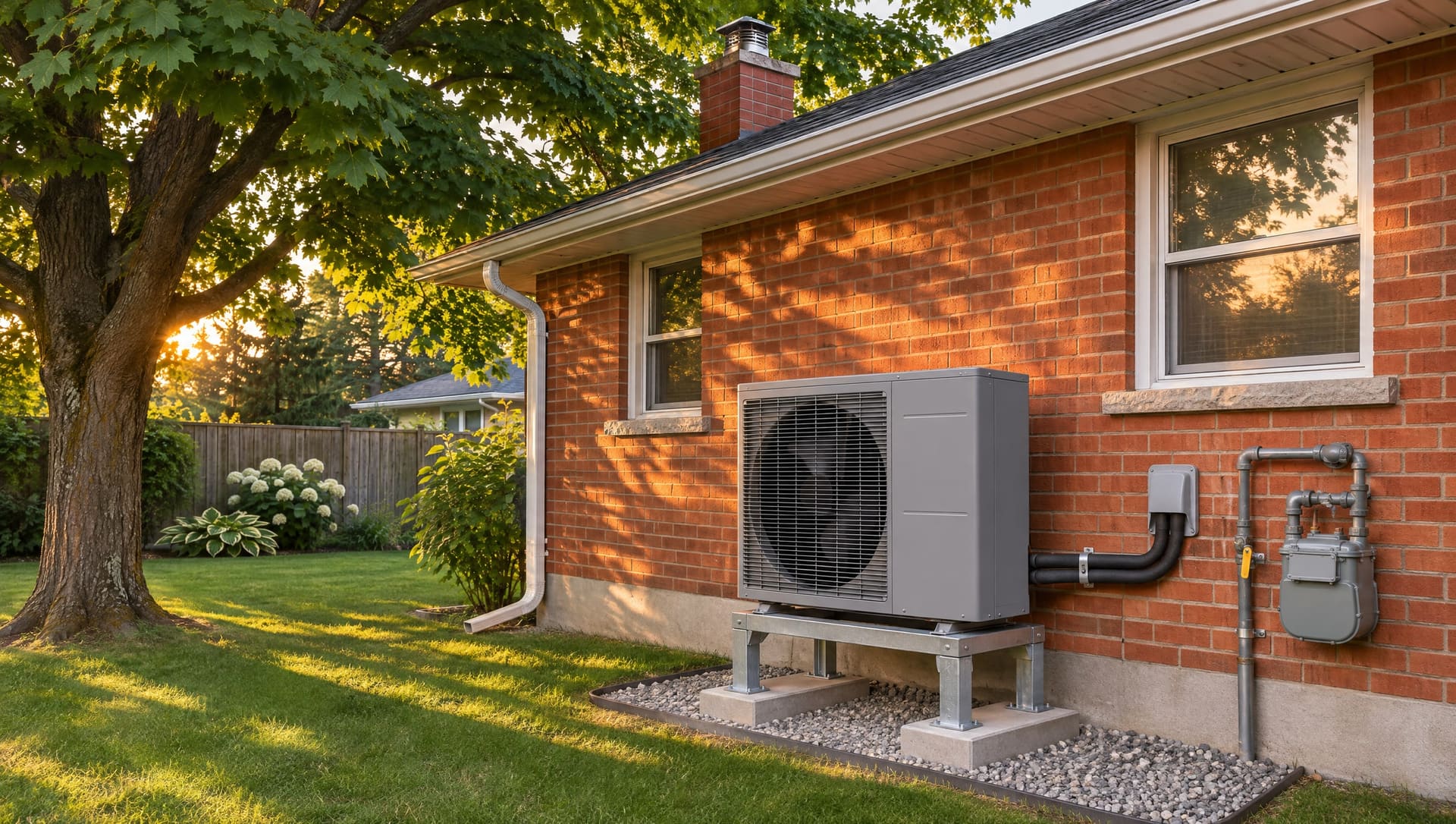
Snow is the local detail that gets missed. The Thornbury Slama normals show 266.6 cm of snow a year, with 79.1 cm in January and 70.8 cm in December. An outdoor unit sitting on a pad at ground level can end up under a drift.
For a cooling-only unit, snow mostly means physical damage and a blocked coil come spring. For a heat pump it matters all winter: the unit needs to breathe, and it needs room to drain the water it sheds when it defrosts.
- Mount it on a stand or wall bracket well above the usual snow depth.
- Keep it out from under a roof edge where snow and ice slide off.
- Leave clear space around it, and make sure the defrost water can drain away without freezing into a ridge under the unit.
- After a heavy snowfall, check it is clear, just as you would a side-wall furnace vent or the gas meter.
What about a cottage that sits empty?
In the 2021 census, 10,811 of Wasaga Beach's 13,768 private dwellings were occupied by usual residents. Many of the rest are seasonal homes that sit empty through the winter. If yours is one of them:
- With a cooling-only system, switch it off at the disconnect for the winter and clear debris from the outdoor unit in fall.
- With a heat pump keeping the place above freezing, have someone check after storms that the outdoor unit isn't buried. A buried unit can't heat, and nobody will notice until the pipes freeze.
- In spring, clean the indoor filters before the first run and check the condensate drain is flowing. A blocked drain leaks down the wall under the head.
Who can install it?
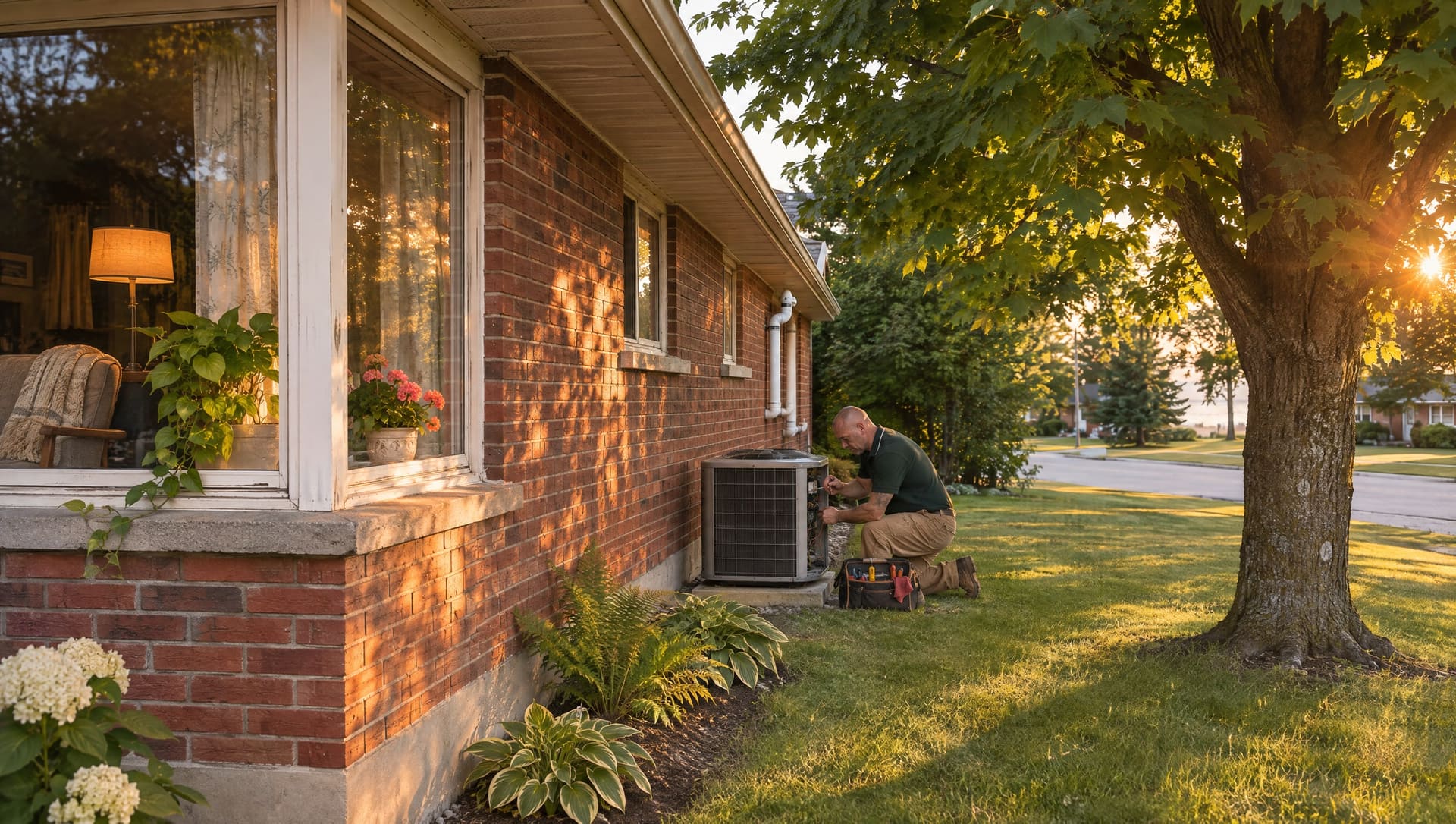
Ductless systems are refrigerant systems. In Ontario, refrigeration and air conditioning is a compulsory trade, so the line set, charging and leak testing are not DIY jobs. Work is performed by 313A refrigeration and air conditioning mechanics. Installing a system yourself from a kit can also void the manufacturer's warranty, so read the warranty terms before you buy.
If you're replacing a furnace at the same time in a house that does have ducts, see whether it's cheaper to replace the furnace and air conditioner together.
For a ductless system sized to your house and placed clear of the snow, see air conditioning installation.